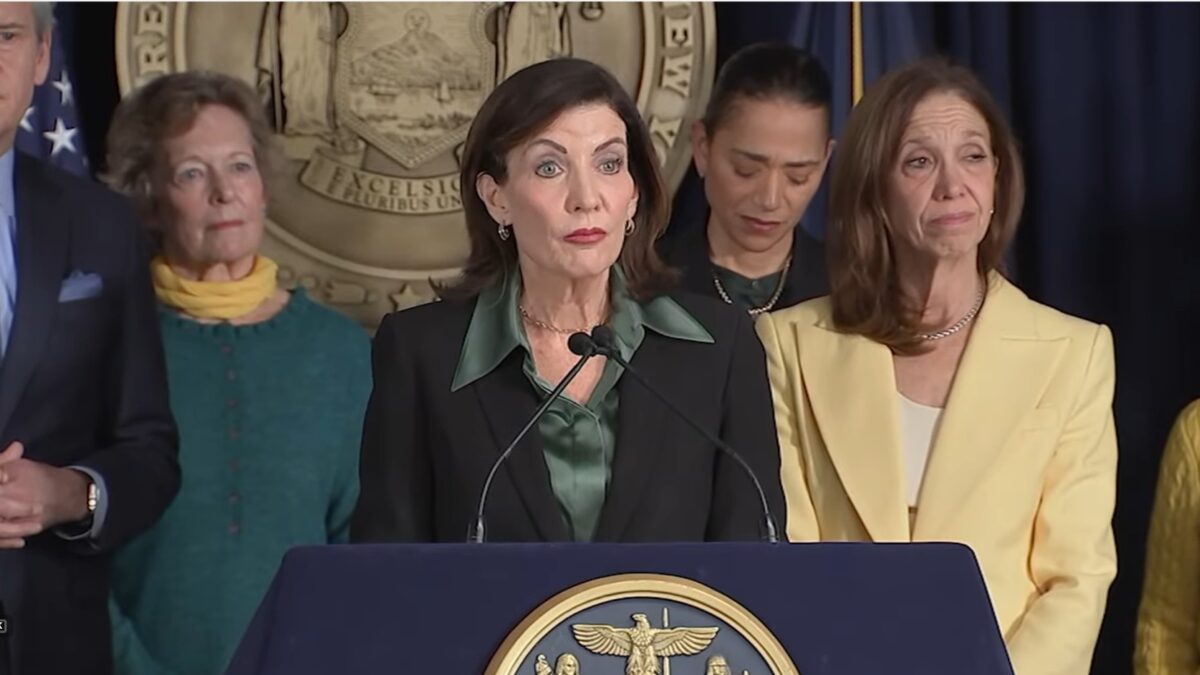
New York has officially crossed a line many Americans never thought a state government would normalize. Gov. Kathy Hochul announced in an op-ed last week that she will sign the Medical Aid in Dying Act, a bill that legalizes physician-assisted suicide for adults diagnosed with a terminal illness. Yes—death, now branded as “medical care.”
Hochul says her decision is rooted in a “genuine and deeply held belief that government must respect the rights and will of the people it serves.” Under the law, adults who are deemed “mentally competent” and given a prognosis of six months or less to live may qualify. The bill also insists that anyone requesting this lethal medication should not be considered “suicidal,” and that intentionally ending one’s life should not be labeled a “suicide.” Because apparently redefining words makes everything more palatable.
With this move, New York joins 12 states and the District of Columbia that now promote what they call “medical aid in dying.” The law allows individual doctors and religiously affiliated medical facilities to opt out—at least on paper. But there’s a catch: physicians who refuse must “promptly” transfer patients to another provider willing to prescribe or dispense the medication. In other words, participate or get out of the way.
Hochul cited personal experience, noting that her mother died from ALS. She wrote about hearing stories of loved ones pleading for an end to suffering and acknowledged the pain of watching someone you love endure a terminal illness. That pain is real. No one disputes that. But personal grief does not justify turning doctors into state-approved death prescribers.
Watching a loved one battle a terminal illness is heartbreaking. Many Americans have lived through it. Yet acknowledging suffering does not mean the government should sanction suicide as a form of healthcare. This bill reframes suicide as treatment and places it alongside legitimate medical options—an extraordinary and dangerous shift.
Even more troubling is the reliance on prognoses as a qualifying factor. A prognosis is not a guarantee; it is an educated estimate. The case of J.J. Hanson makes that painfully clear. Diagnosed with terminal brain cancer, Hanson was given four months to live. Instead, he lived more than three additional years—long enough to meet his newborn child, something doctors said would never happen. Under this law, his life could have ended based on a prediction that proved wrong.
At the end of the day, individuals make their own choices. But when the government endorses suicide as “dignified care” and pushes medical professionals toward facilitating death rather than fighting for life, it fails its citizens. Terminal illness is already physically, emotionally, mentally, and financially devastating. Patients deserve doctors who are committed to care, compassion, and hope—not an exit strategy wrapped in clinical language.
Opening the door to physician-assisted suicide doesn’t just change healthcare policy; it changes the moral foundation of medicine itself. A society that asks doctors to help people die instead of helping them live has lost its sense of purpose. The good news is that this debate isn’t over. Americans are still asking hard questions, standing up for life, and demanding that compassion mean care—not surrender. And that resolve, grounded in common sense and human dignity, remains very much alive.