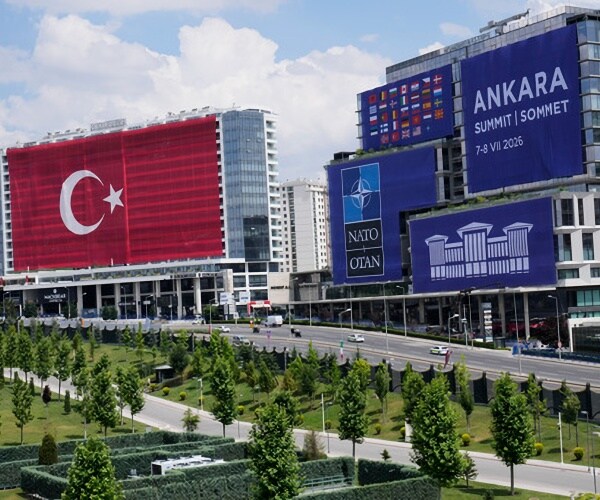
President Donald Trump reignited controversy Tuesday by again insisting that the United States should control Greenland, even as North Atlantic Treaty Organization> unveiled major new defense initiatives aimed at strengthening the alliance and addressing long-standing U.S. concerns over military spending.
Speaking alongside Turkish President Recep Tayyip Erdoğan in Ankara, Trump argued that Greenland is strategically vital to U.S. national security, claiming the Arctic region faces increasing activity from both China and Russia.
"That should be controlled by the United States, not by Denmark," Trump told reporters, reiterating a position that has repeatedly strained relations with European allies.
Trump said Greenland is an essential strategic location and maintained that Washington cannot allow Russia or China to gain greater influence in the Arctic. His comments are likely to concern NATO members, as the alliance is founded on the principle of mutual defense and respect for the territorial integrity of its member states.
During the same meeting, Trump announced that his administration would remove U.S. sanctions imposed on Turkey following its 2019 purchase of the Russian-made S-400 air defense system.
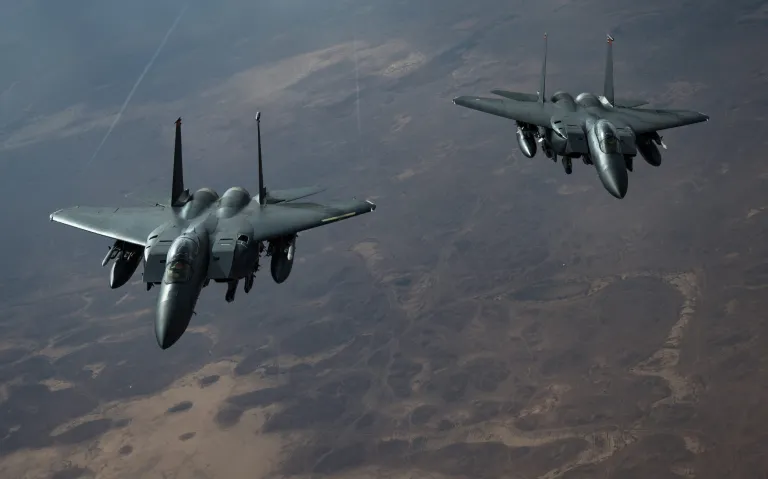
The sanctions had led to Turkey's removal from the U.S.-led Lockheed Martin F-35 Lightning II fighter jet program.
Trump said senior administration officials—including Secretary of State Marco Rubio, Treasury Secretary Scott Bessent, and Defense Secretary Pete Hegseth—are working to remove the remaining barriers.
The president also said the United States would consider allowing Turkey to purchase F-35 fighter jets again, praising Ankara as "much more loyal than other countries."
Erdoğan welcomed the announcement and expressed optimism that Turkey would eventually regain access to the advanced fighter aircraft.
However, significant legal and political obstacles remain. U.S. law still restricts F-35 sales to Turkey while it retains the Russian S-400 system, and Benjamin Netanyahu has publicly opposed any sale, citing security concerns.
Earlier Tuesday, NATO Secretary General Mark Rutte unveiled a series of multinational defense programs designed to modernize the alliance's military capabilities.
Among the largest initiatives:
- Swedish defense company Saab will provide up to 10 GlobalEye airborne surveillance aircraft to replace NATO's aging AWACS fleet.
- Fifteen NATO countries launched a joint effort to acquire new Airbus A330 Multi Role Tanker Transport refueling and transport aircraft.
- Four alliance members agreed to purchase up to five Triton surveillance drones to expand NATO's intelligence and reconnaissance capabilities.
Rutte said the investments represent "money well spent" and emphasized the need to convert Europe's economic strength into military capability through increased spending on missiles, drones, air defense, and surveillance systems.
Some of the projects will be financed through a new European Union defense lending program worth up to $170 billion, intended to accelerate military modernization across Europe.
Meanwhile, Ukrainian President Volodymyr Zelenskyy renewed his appeal for Ukraine to join NATO, arguing that the country's battle-tested military would strengthen the alliance.
Zelenskyy said Ukraine's forces are eliminating roughly 30,000 Russian troops per month and highlighted Kyiv's growing ability to strike strategic targets deep inside Russia.
He is expected to meet with Trump on Wednesday during the summit.
NATO officials also acknowledged continued concerns about Russian hybrid warfare—including cyberattacks, sabotage, and airspace violations—but said the alliance believes its military posture has successfully deterred any direct attack against NATO member states.